Henrik is attached as a judge at the IWSC. International tastings become a second profession. The lesson is severity: if you cannot say why a spirit is good, you should not bottle one.
The Distiller
Henrik Hammer
A judge’s palate, a father’s name on the label, and a line of spirits that keep choosing history over haste.
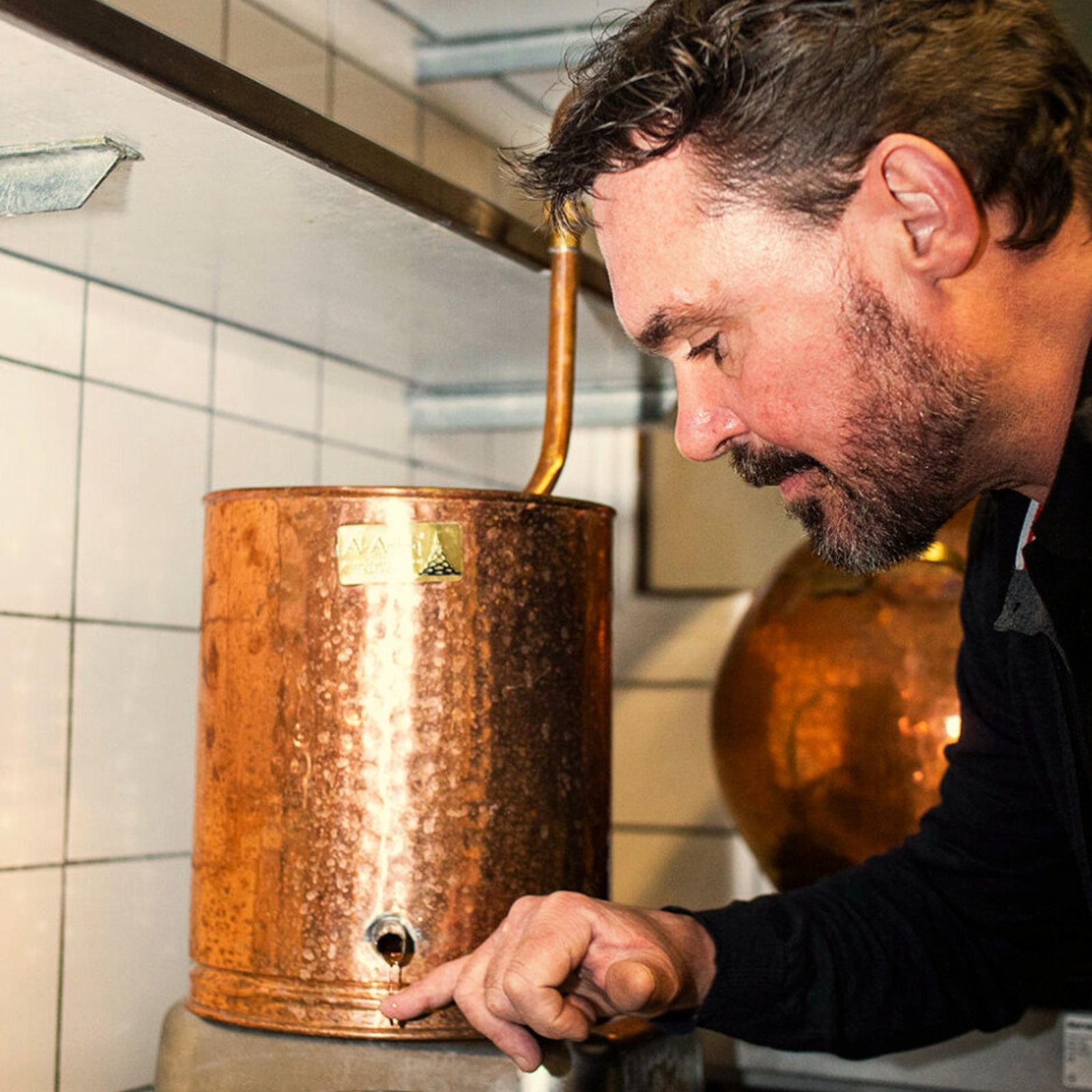
Before he was a distiller, Henrik Hammer was a listener. As a consultant by day he ran PC Brokers; in the evenings he trained a palate that would be asked, year after year, to decide what “good gin” meant for everyone else.
In 2004 he became a regular judge at the International Wine & Spirit Competition in London. The work sharpened a dissatisfaction. Too many gins occupied the same narrow band. Then a geranium leaf — crushed between the fingers — suggested a pairing that was not fashionable so much as old: geranium and juniper have shared therapeutic and culinary lives for a very long time. Chemical analysis later confirmed what the nose already knew. The oils talk to each other.
The brand name is not a flourish. Hans and Henrik Hammer — father and son — took the idea to Langley’s Distillery in Birmingham. Hans died before the first bottle of Geranium Gin was filled. The label still says what the work was: a house, not a solo.
Interactive timeline
From the judging table to the mill.
Open each year. The story is meant to be read in order, the way a still is run — one cut after another.
Geranium Premium London Dry Gin is launched. Distilled in partnership with Langley’s, on a century-old 3,000-litre pot still nicknamed Constance, after years of Danish research into geranium oil. The house is named Hammer & Son. A Gold Medal and Best in Test at the World Spirits Awards arrive the same year.
A second gin, built from an eighteenth-century recipe held at Langley: eleven botanicals, a little sugar after distillation in the Old Tom manner, bottled in reused champagne bottles with cork and wax. History, this time, is not a mood. It is a method.
Old English Gin is named World’s Best Gin at the 2015 World Gin Awards. The following year Geranium is the gin in “The Best Scene”, Kenji Tsubokura’s winning cocktail at the IBA World Cocktail Championship — a Danish spirit in a competition that usually belongs to the oldest houses.
Frederiksberg Destilleri begins in the basement of Frederiksberg Rådhus, first on a 3-litre alembic on a kitchen plate, then a Portuguese copper of about 30 litres. Lavender from the university gardens, acorns from Frederiksberg Have, each botanical distilled apart. Frederiksberg Gin takes IWSC gold — among the first Danish gins to do so. The destilleri later closed; the gin is now distilled at Vintre Møller.
Henrik takes over the old brewery and mill at Vintre Møller, Kirke Såby — a site that has milled, brewed, and made mineral water since the fourteenth century. The new work is not only more stills. It is a farm, a well, and a sustainability brief written as operations, not marketing. In time the mill becomes the house’s only distillery.
Green Meadow Organic Vodka is released in August, cut only with artesian well water. IWSC calls it sleek and understated; The Vodka Masters awards gold. A first sustainability report is published. Silver Forest Vodka, diluted with birch sap from Ordrup forest, appears the same year.
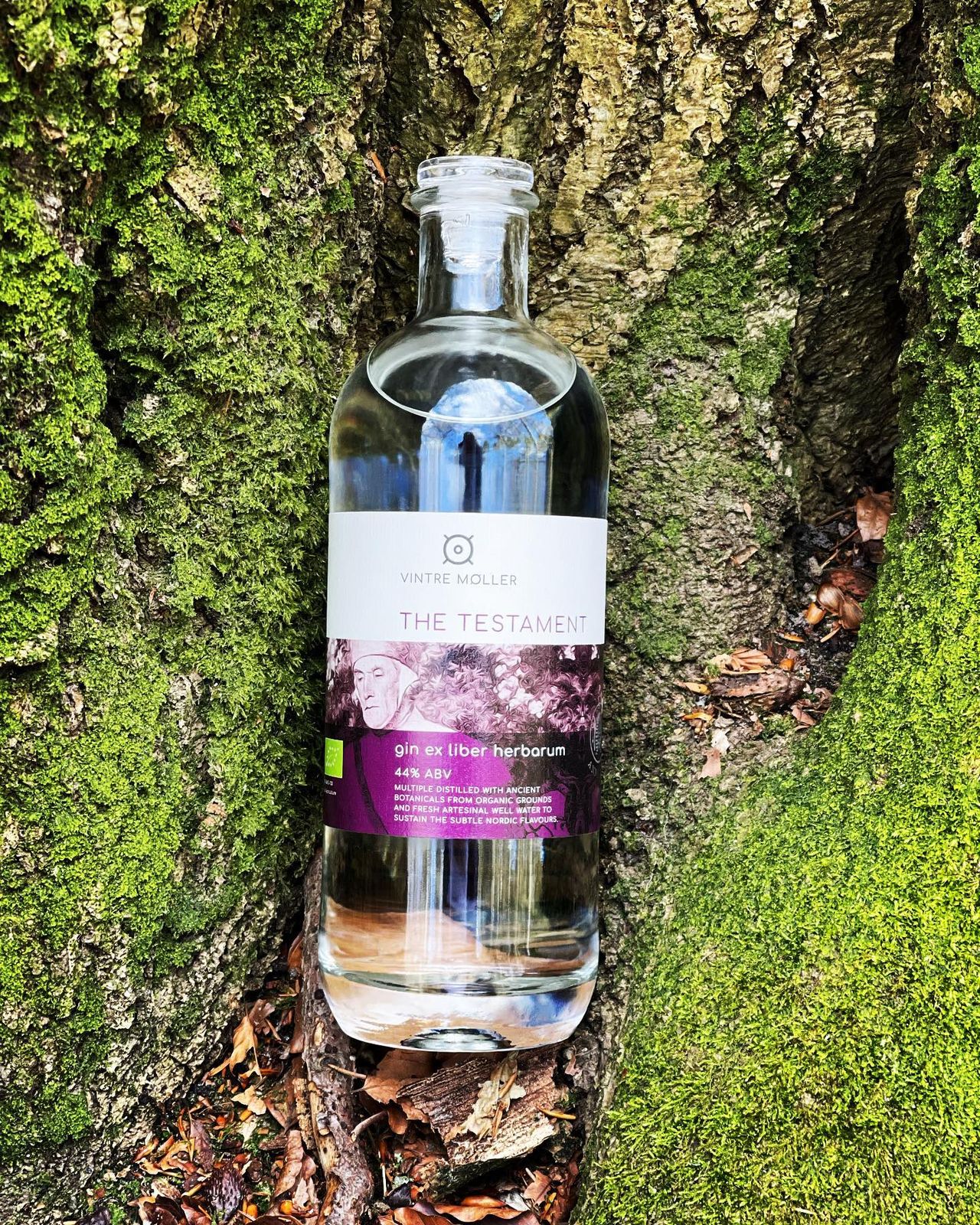
Estate barley is laid down for Vintre Møller whisky. Reinheart Rye — made with friends Kristian and Terkel, aged 6–7 years in American virgin oak at the mill — takes gold from The Spirits Business in 2023. The Testament Organic Gin looks further back still, to Henrik Harpestreng of Roskilde, physician to a medieval king.
Frederiksberg Destilleri is no longer active. Vintre Møller is the only place of production. Frederiksberg Gin continues — same borough botanicals, same London Dry structure — distilled on the estate stills.
The palate is a tool, not a personality.
Hammer’s gins are often described as precise rather than loud. Geranium is a London Dry that happens to have a rose-citrus register. Old English is historical without costume. Frederiksberg is local without shouting the park — born under the town hall, made now at the mill. The through-line is a judge’s habit: balance first, then character.
He still harvests. He still delivers plants when their oil is highest. The house has grown stills and land; it has not outsourced the reason it exists.